
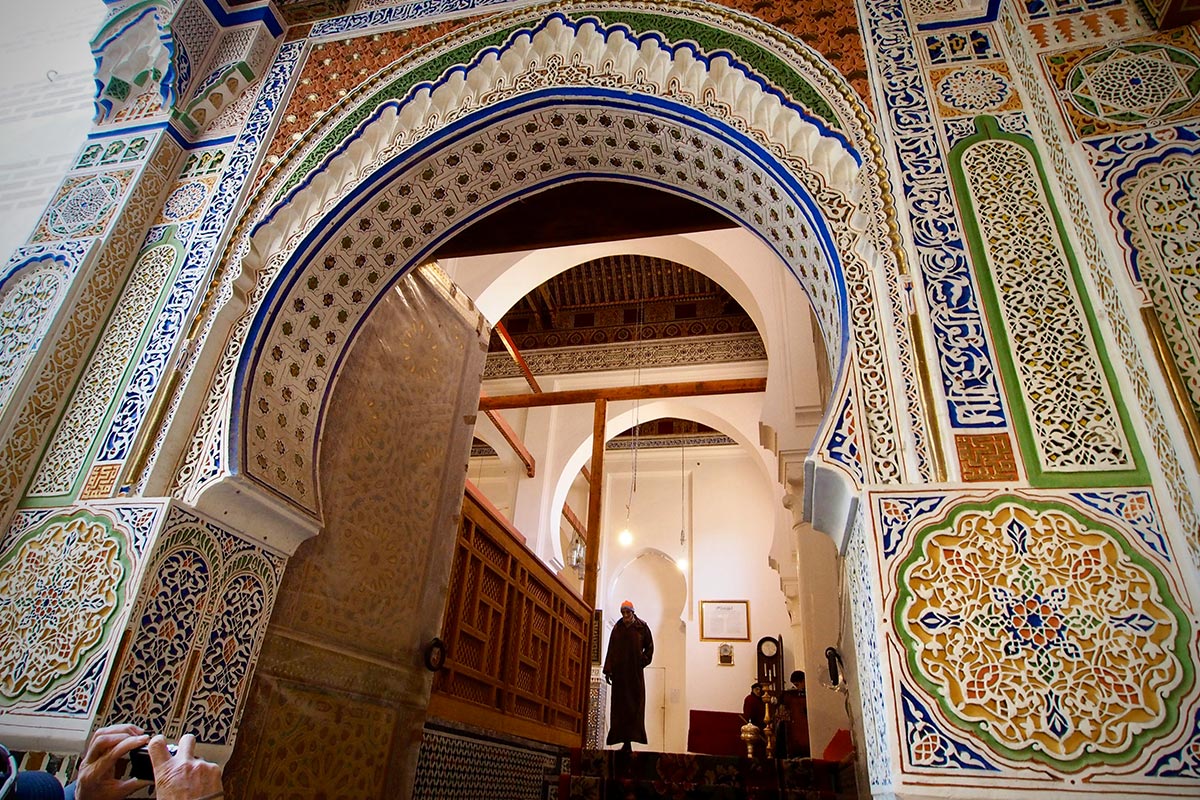
Fes is one of those rare cities that doesn’t close for the off-season. It doesn’t need to. Whether you wander its ancient medina under a pale winter sky or watch its alleyways fill with the buzz of a spring festival, Fes always has something worth showing you. But “worth visiting year-round” doesn’t mean every month gives you the same experience.
The truth is, the best time to visit Fes depends entirely on what kind of traveler you are. Are you after comfortable weather for long walks through Fes el-Bali? Or would you rather avoid the crowds and stretch your budget? Maybe you want to time your visit around the Fes Festival of World Sacred Music, one of the most celebrated cultural events in North Africa. Each of those goals points to a different window on the calendar.
This guide breaks it all down (season by season, crowd by crowd, and festival by festival) so you can plan a trip that actually matches how you like to travel.
Ask most experienced travelers when to visit Fes and they’ll say spring without hesitation. It’s not hard to see why. Temperatures sit comfortably between 18°C and 28°C, the surrounding hills turn green from winter rains, and the city feels alive without being overwhelmed.
April and May are the standout months. Days are long and sunny, the air is warm without being oppressive, and the medina is walkable at any hour. You can spend a full afternoon exploring the tanneries, the souks, or the mosaic-tiled courtyards of the madrasas without counting down the minutes until shade. Spring is also when the countryside around Fes looks its most dramatic; rolling green valleys and wildflowers frame the city’s ancient walls in a way that summer heat simply cannot replicate.
March can be a slightly trickier month depending on the year. Ramadan sometimes falls in March, which shifts the rhythm of daily life in Fes considerably. Restaurants may be closed during daylight hours, and some services run on adjusted schedules. That’s not necessarily a reason to avoid it; Ramadan in a Moroccan city has its own magic, especially after sunset when the streets fill with families breaking their fast; but it does require some flexibility in how you plan your days.
Good for: First-time visitors, walking tours, photography, day trips to Volubilis or Chefchaouen
Watch out for: Rising accommodation prices and early bookings required in April–May
Book a guided Fes Medina tour in spring for the most comfortable sightseeing experience of the year.
Fes in summer is not for the faint-hearted. Temperatures regularly climb above 35°C and can push past 40°C in July and August; this is an inland city with no sea breeze to rescue you. The midday hours inside the medina feel intense, and the narrow streets trap heat in ways that can catch visitors off guard.
That said, summer has its advantages if you plan around the heat rather than against it. Early mornings in Fes are genuinely beautiful; the medina before 9am has a quieter, more local feel that peak-season afternoons simply don’t offer. Evenings, too, come alive once the temperature drops, with rooftop terraces, late dinners, and a city that stays up well past midnight during Ramadan if it falls in this period.
Summer is also when tourist numbers dip slightly compared to spring, which means shorter queues at popular spots and a slightly more relaxed atmosphere in the souks. If you’re committed to an early-morning-and-late-evening schedule and don’t mind retreating to your riad or a cool museum during peak heat, summer can be a surprisingly rewarding time to visit.
Good for: Budget travelers, heat-tolerant visitors, early morning and sunset tours
Watch out for: Midday heat is genuinely extreme; light clothing, sun protection, and hydration are non-negotiable
Choose a private early-morning tour to explore the medina comfortably before the heat peaks.
Autumn doesn’t always get the attention it deserves in travel guides, but for Fes, October and November offer some of the most balanced conditions of the year. The fierce summer heat has faded, temperatures settle back into a comfortable range of 20°C–28°C, and the tourist crowds that defined April and May have thinned out.
September sits in an interesting middle ground. Technically autumn, it still carries a lot of summer’s heat and, increasingly, a lot of summer’s crowds; it’s worth treating September more like a late-summer month than a true shoulder season. By October, the shift is more noticeable. Light is softer, the medina is more navigable, and you can genuinely linger at the Chouara Tannery or the Al-Qarawiyyin mosque without being shoulder-to-shoulder with other visitors.
Autumn is also a great time to pair Fes with day excursions to nearby destinations. The Middle Atlas mountains are beautiful in October, and the drive toward Ifrane (sometimes called “Morocco’s Switzerland”) is particularly scenic as the season turns.
Good for: Cultural travelers, day trip combinations, repeat visitors seeking a quieter Fes
Watch out for: October can still be warm; November brings occasional rain
Winter in Fes is a different kind of experience. Cool temperatures (typically between 8°C and 18°C) and occasional rainfall mean fewer visitors make the trip, and the city settles into a quieter, more local rhythm. That’s actually a compelling reason to come.
The medina in January or February feels genuinely lived-in rather than performed. Artisans work without an audience, the souks are navigable, and you can have conversations with shopkeepers that aren’t shaped entirely by the demands of high season. Hotel prices drop noticeably, and some of the city’s most sought-after riads become available without months of advance booking.
The trade-off is comfort. Fes gets cold in winter; not dramatically so, but most traditional riads and older buildings lack central heating, so packing layers matters. Rain is a possibility, particularly in December and January, though clear winter days in Fes have their own charm: crisp air, soft light, and the ancient city looking its most timeless.
Good for: Budget travelers, slow travelers, those seeking an authentic off-season experience
Watch out for: Pack layers — evenings get cold, and heating in older riads can be minimal
Understanding crowd patterns in Fes isn’t just about comfort; it directly affects what you pay, what you can book, and how your experience actually feels on the ground.
High Season runs through April, May, September, and October, as well as Easter and other European holiday periods. These months bring higher accommodation rates, competitive demand for guided tours, and a medina that can feel genuinely congested at peak hours. The upside is that everything is fully operational: restaurants, tour operators, and cultural sites all run at full capacity.
Low Season: primarily January and February, plus the height of summer; means fewer visitors, more negotiating room on prices, and a pace that suits travelers who prefer depth over efficiency. Some smaller tour operators reduce their schedules in the quietest weeks, so confirming availability in advance is still worthwhile.
The difference in experience between a Saturday in May and a Tuesday in January is significant. Neither is wrong; they just give you a different version of Fes. Knowing which one you want is half the battle.
Contact us to organize your Fes visit and secure your spot before peak-season tours fill up.
The Fes Festival of World Sacred Music is one of Morocco’s most internationally recognized cultural events, drawing artists and audiences from across the world for a week of concerts, workshops, and spiritual performances. The setting (ancient medersas, open-air venues, and centuries-old courtyards) gives it an atmosphere that simply can’t be replicated in a conventional concert hall.
It typically takes place in late May or early June, and the dates shift slightly each year, so checking the official schedule ahead of time is essential. The festival brings significant hotel demand to Fes, so booking accommodation several months in advance is genuinely necessary, not just recommended.
If you appreciate world music, Sufi traditions, or simply want to experience Fes during one of its most vibrant weeks, this festival is worth planning an entire trip around.
Ramadan transforms the rhythm of Fes in ways that are worth experiencing at least once. During the day, many restaurants and cafes are closed or operating on adjusted schedules. The medina quiets in the afternoon. But after Iftar (the evening meal that breaks the fast) the city comes alive in a way that’s unlike any other time of year. Families gather, street food stalls emerge, and there’s a warmth and communal energy that feels deeply authentic.
The date of Ramadan shifts each year according to the Islamic lunar calendar, so checking when it falls relative to your planned travel dates is important whether you plan to visit during it or around it.
Fes also hosts local moussems (traditional religious and community festivals tied to specific saints or seasons) throughout the year. These events vary in scale but offer a window into Fassi culture that organized tourism rarely reaches.
Plan your visit around Fes festival dates for a richer, more layered cultural experience.
| Travel Priority | Best Months | Why |
|---|---|---|
| Best overall weather | April – May | Mild temperatures (18–28°C), long days, manageable crowds |
| Fewest tourists | January – February | Low season, quieter medina, authentic atmosphere |
| Cultural festivals | Late May – June | Fes Festival of World Sacred Music, Sufi events |
| Budget travel | December – February | Lower hotel rates, less demand for tours |
| Autumn balance | October – November | Warm but comfortable, thinning crowds, great for day trips |
| Summer adventure | June – August | Beat crowds with early starts, heat manageable with planning |
Spring (particularly April and May) offers the most well-rounded conditions for most visitors. The weather is comfortable, the city is beautiful, and the combination of cultural richness and outdoor walkability makes it genuinely hard to beat. Autumn, particularly October, runs a close second for many of the same reasons, with the added benefit of lower prices and fewer tour groups.
Summer works best for travelers who are organized about it. If you’re willing to start early, rest midday, and explore again in the evening, Fes in July or August can be deeply rewarding. It rewards flexibility.
Winter suits a specific kind of traveler: someone who values atmosphere over weather, slow mornings over packed itineraries, and a more personal encounter with the city’s everyday life. The Fes you find in January is quieter and cooler; but in many ways, it’s the most honest version of the city.
No matter when you go, Fes delivers. The question is simply which version of it you’re most ready to experience.
Explore our private tours and tailor-made Fes experiences; designed to make the most of your trip, whatever season you choose.